AI-designed proteins pass an early binding test against scorpion toxins
- What it is
- A public report describes laboratory binding tests of AI-designed proteins against scorpion toxins, alongside the released measurements.
- Who did it
- Anthropic and human collaborators, with measurements by Adaptyv Bio and Twist Bioscience; the report lists Claude Science among its authors.
- What it could mean
- Provides early candidates and inspectable evidence for further research on neglected envenomation, without establishing an antivenom.
See the check plan
Evidence & validation
From announcement to evidence
Discovery recorded. The source reports the evidence below; State of Proof has not independently reproduced the work.
Read the original work
De novo design of protein binders against scorpion toxins with Claude ↗See the proposed checks
Compare the reported binding classifications with controls, replicate agreement and cross-laboratory measurements, keeping functional outcomes separate from attachment.
Independent examination not started
Peer review, simulation comparisons, laboratory evidence and independent replication are distinct. Inclusion here does not establish all of them; see the record’s source and current boundary.
How we distinguish research evidence →
Binding is one step, not a treatment
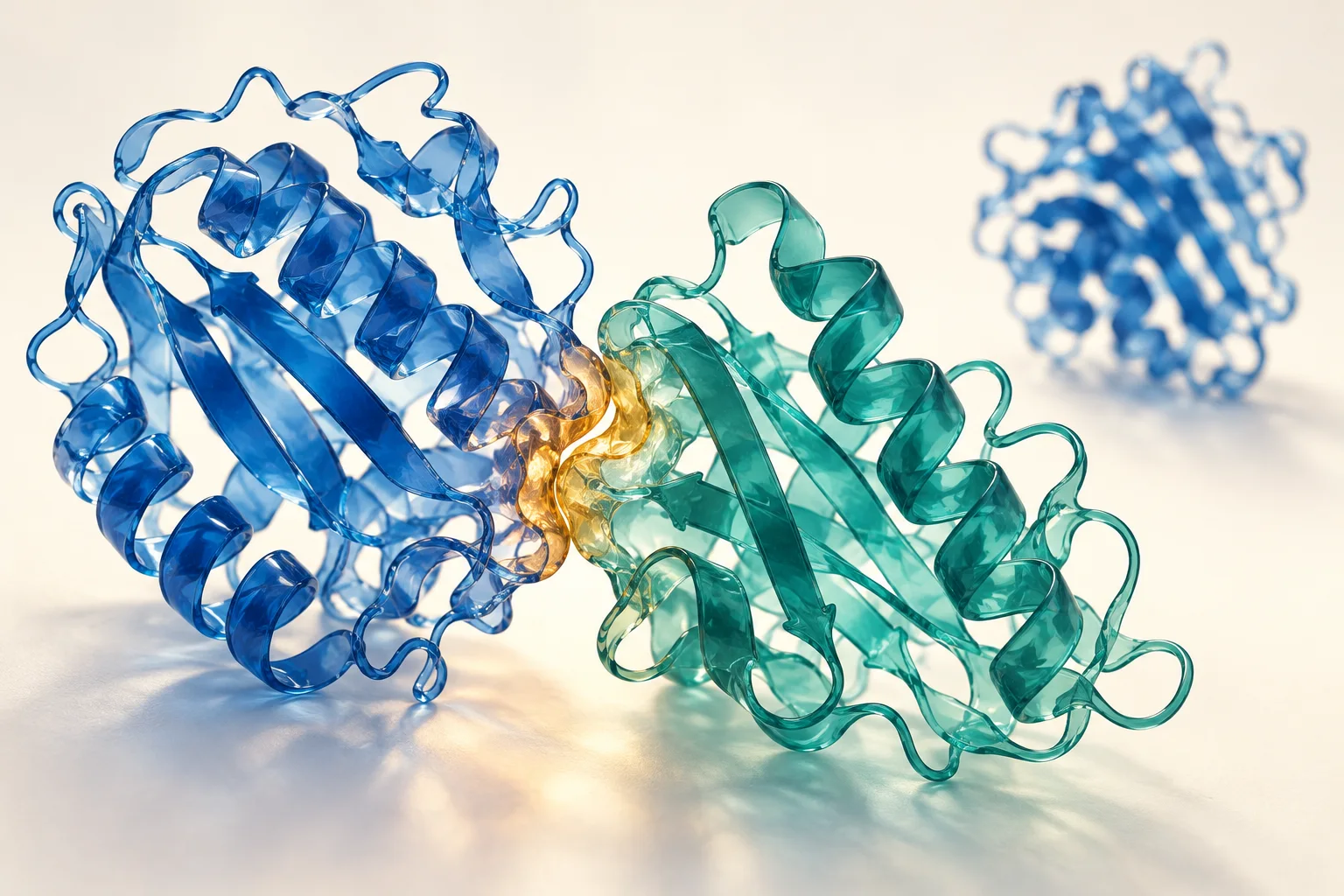
The abstract contact surface introduces molecular binding. These invented folds are not actual sequences or structures, and do not show toxin neutralization or antivenom efficacy.
Read the source · Technical report · tested designs, binding criteria and limitations ↗- Source kind
- Company technical report with laboratory binding measurements
- Evidence reported
- Public technical report; Contract-laboratory binding measurements; Released assay data
- AI role
- An internal Claude model generated protein candidates, helped select candidates for testing, and assisted with analysis and report preparation under human supervision.
- Human role
- Collaborators selected the research question, targets and prompts and supplemented candidate selection; Adaptyv Bio and Twist Bioscience performed the laboratory measurements.
- Source date
- ; added 2026-10-26
- What it claims
- The report says 17 of 211 tested AI-designed proteins met its binding criteria against four of five scorpion toxins. No design intended to bind multiple toxins met the criteria against more than one.
- Why this could matter
- AI-designed proteins pass an early binding test against scorpion toxins Laboratory tests found that some AI-designed proteins attach to scorpion toxins. Such binding can provide a starting point for treatment research, but the study did not establish that these proteins block toxin activity or protect an animal.
- If it holds up
- Independent researchers gain starting points for testing whether the observed binding can translate into useful toxin inhibition.
- If it does not
- Repeat measurements or functional tests would show which reported attachments are assay-dependent or fail to affect toxin activity.
- Impact horizon
- Enabling · Protein research · Neglected diseases · Experimental evidence
- Version
- Technical report dated October 20, 2026; no numbered version stated; fixed publisher PDF locator
- Why we tracked it
- An October 20 technical report makes initial laboratory results and the underlying measurement data inspectable.
- Highest-risk dependency
- No neutralization, animal efficacy or patient benefit was tested. Recombinant toxin activity was undocumented, affinity estimates are preliminary, and assay controls and surface effects limit interpretation.
- Available artifacts
- Publisher technical report and https://huggingface.co/datasets/Anthropic/scorpion-toxin-binder-design at revision 0bac3d0286f7f83b5339f5b4f1e67fbe47a6e7c1 (October 20), CC BY 4.0. Released measurements include binding results and sensorgrams. This intake contains no sequences or experimental instructions.
- Current boundary
- Intake record only; examination not started. Company technical-report intake; peer review and independent replication are not established here. Binding is not toxin neutralization. This work does not establish an antivenom, safety or clinical efficacy. Independent examination has not started.